the red thread
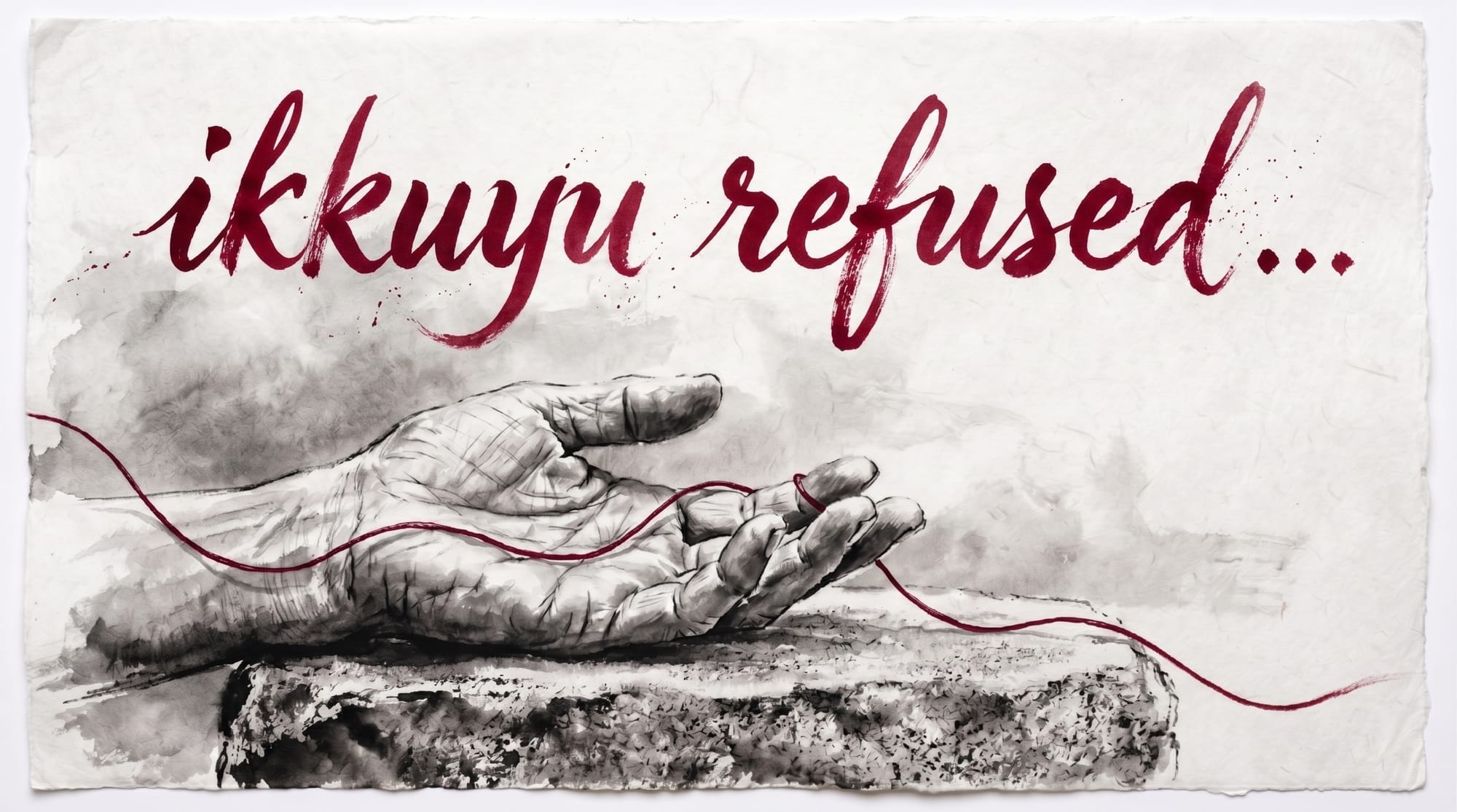
this is a short research series on Ikkyu Sojun, a fifteenth-century Rinzai zen monk, and on what his refusal of the institutional seal of enlightenment, and the practice he built in the decades after refusing it, still make possible.
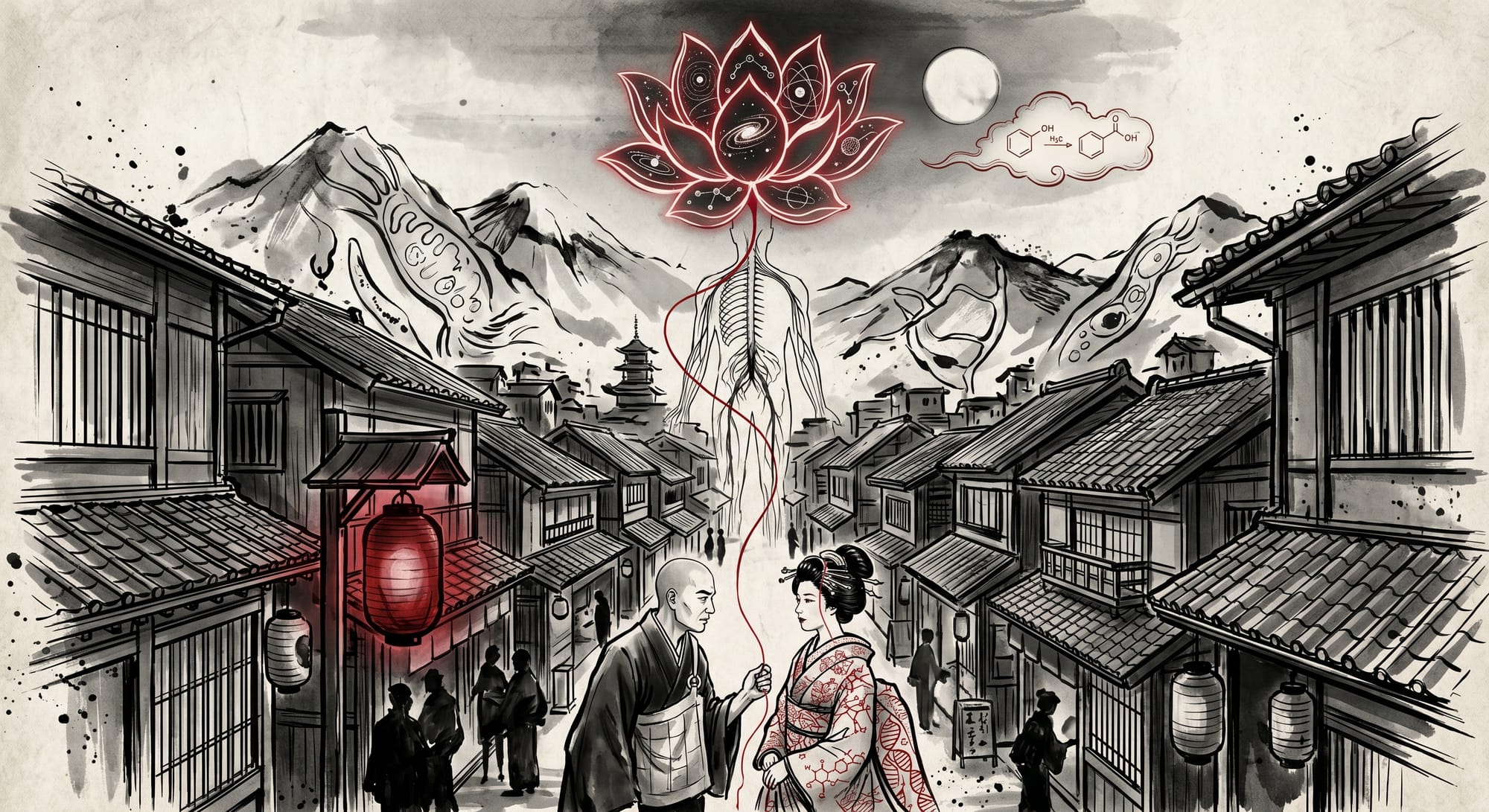
Ikkyu was born in 1394, the illegitimate son of the emperor of Japan, placed in a Kyoto monastery at the age of five. he loved the dharma and had no patience for the hierarchy around it, and when his teacher offered him the inka shōmei, the seal of formal enlightenment that would have admitted him to the Rinzai establishment, he walked out instead. he spent the next fifty years teaching outside the monasteries. his students were hobos, criminals, prostitutes; the people the credentialed teachers would not sit with. he wrote poems that the tradition is still not sure what to do with. at seventy-seven he fell in love with a blind singer named Lady Shin and wrote the most tender and most graphic dharma poems in the Japanese tradition. at eighty he accepted the rebuilding of Daitokuji, the great temple his refusal had put him outside. he died at eighty-seven with the work unfinished.
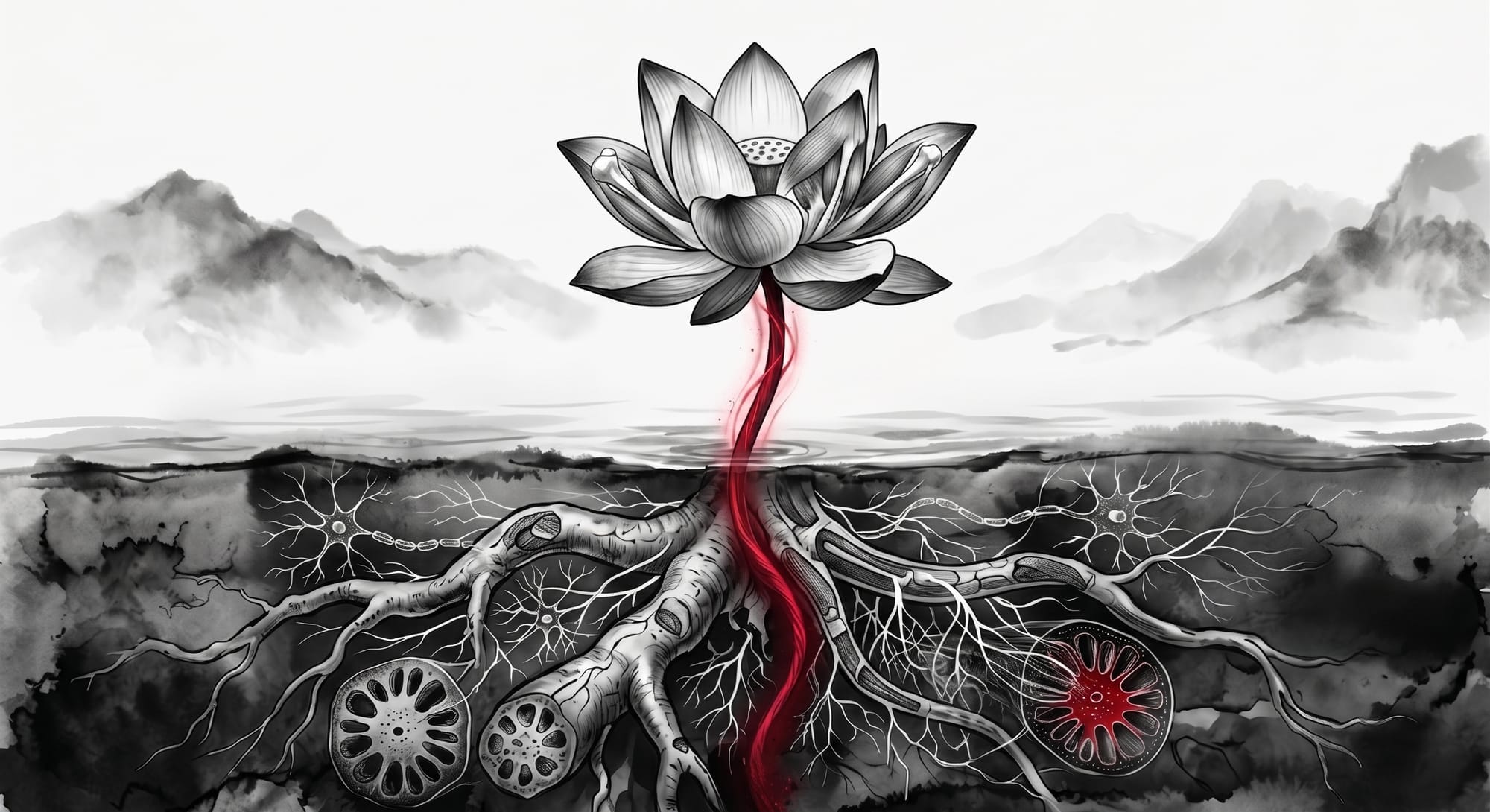
the practice he built out of the refusal he called Red Thread Zen, after a phrase he borrowed from the Song dynasty Chinese master Kido Chigu. the red thread is the thread of passion that ties every embodied person to the conditions of birth and death. Ikkyu’s claim, in a buddhism that had largely moved in the opposite direction, was that this thread was not the obstacle the practice had to cut through but the substrate the practice was made of. the contemporary writer Susan Murphy has given Red Thread Zen its most serious English-language recent reading, and that reading is what this series has been drawing on.
four essays. ikkyu refused the inka is the intro, on the refusal and the argument the refusal is making about what institutional certification can and cannot produce. red thread zen: passion as substrate is on the practice itself, on what Ikkyu borrowed from Kido and did with it, and on why a buddhism that treats desire as defilement is not the only buddhism. streets and brothels is on where Ikkyu taught and why the location is not incidental; a dharma that cannot leave the monastery belongs to the monastery. lady shin and the missing female self is the synthesis, on the relationship at the end of his life, on the poems, and on what the whole arc integrates into.
the series runs short on purpose. Ikkyu rewards long attention, and these essays are not a comprehensive treatment; they are the opening of a research thread. more may follow. for now, the refusal, the substrate, the geography, and the integration.
The Series