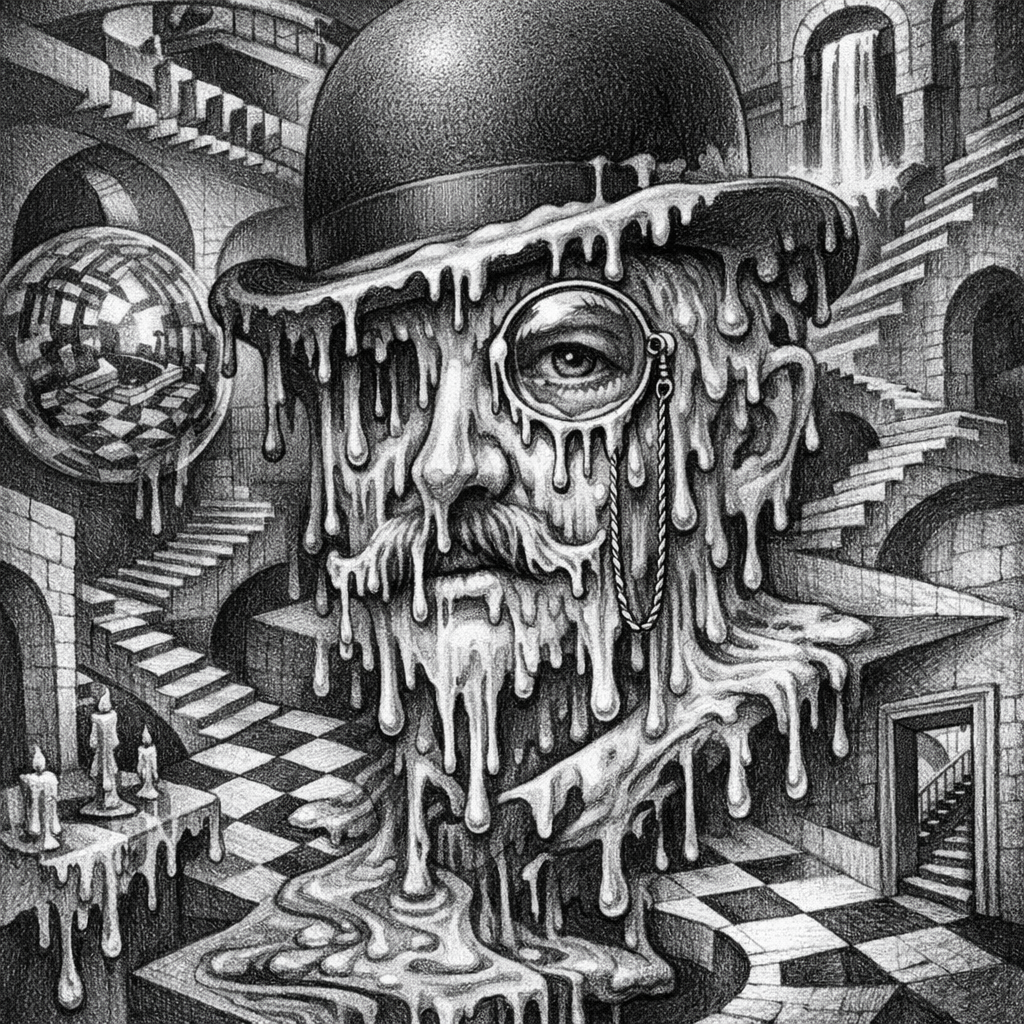
what happened to the liminal caste under modernity
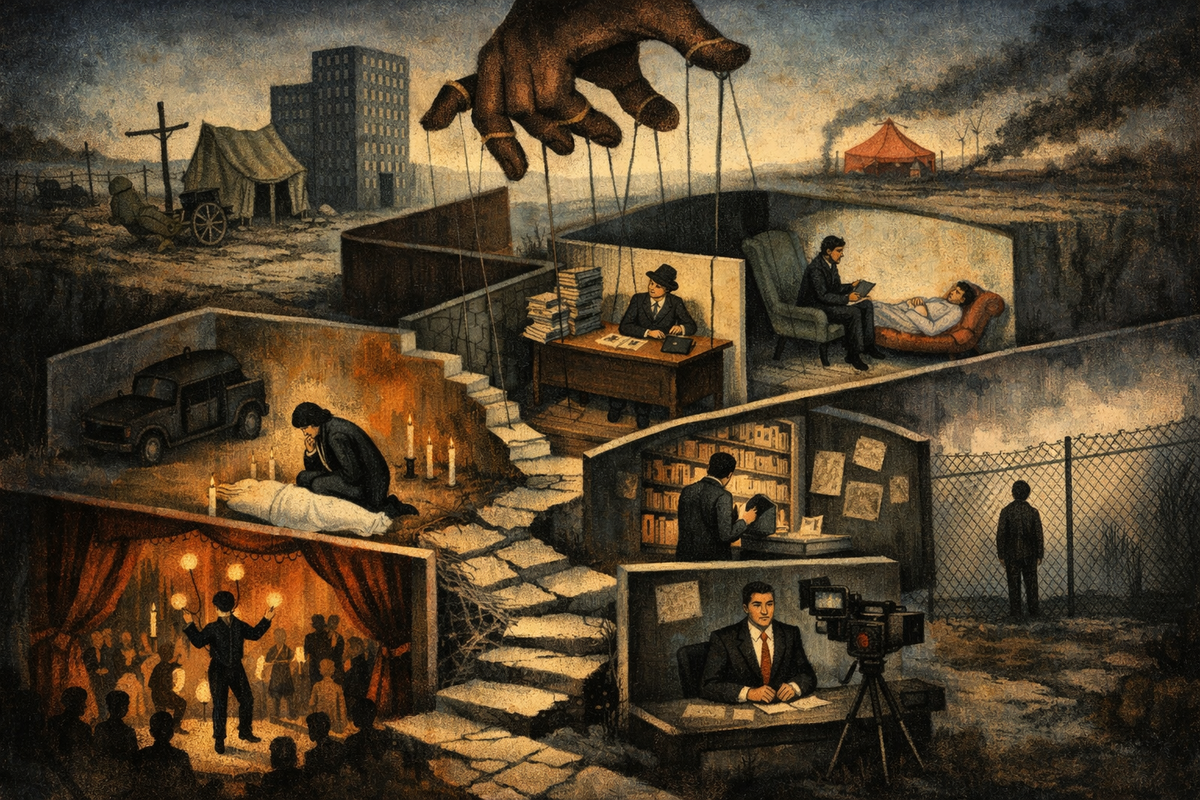
modernity does not abolish the liminal function. it attacks the conditions under which the old carrier class could continue holding it in the old way. that distinction matters because a great deal of bad history turns on confusing vessel with function. the vessel can be criminalized, bureaucratized, broken apart, or declared obsolete while the underlying work remains as necessary as ever. death still has to be handled. truth still has to reach power obliquely. memory still has to be made public. thresholds still have to be crossed. the modern world simply hates admitting that it has inherited these needs intact.
the forces doing the damage are familiar. the nation-state wants fixed populations, registries, addresses, surnames, and administratively legible households. industrial capitalism wants labor disciplined by clock and place rather than moving in seasonal or itinerant rhythms. modern professional culture wants expertise certified by institutions rather than carried through hereditary office and embodied repertoire. mass entertainment wants the performance without the social ecology that produced it. all of these pressures converge on the old liminal formations and make them hard to sustain as living total roles.
that is why the modern story is not simple emancipation. sometimes modern reform really does remove legal humiliations, which matters. but even where it does, it often does so by dissolving the container and redistributing the contents. the center no longer says out loud that one caste will carry death, memory, truth, and threshold work. instead it hands those functions to separate professions, industries, bureaucracies, and media systems. the hierarchy becomes cleaner in language and murkier in structure.
fixed address against moving life
one of modernity’s first enemies is mobility. the traveling performer, diviner, tinker, animal handler, itinerant ritual specialist, and fairground body all become much harder to tolerate inside a state that wants everyone named, counted, schooled, policed, taxed, and locatable. roads that once carried performer ecologies now carry police attention, permits, and administrative suspicion. wandering becomes vagrancy. nomadic expertise becomes illegibility. illegibility becomes a problem the state means to solve.
this matters because so much liminal function depended on motion. the troupe could speak differently because it could move on. the fairground specialist could gather a crowd because he was not fully absorbed into one village’s obligations. the fortune teller could work the threshold because she stood partly outside fixed domestic identity. once mobility is criminalized or bureaucratically thinned into licensed entertainment, part of the old angle disappears.
institutionalization without continuity
the second modern move is institutionalization. grief becomes the funeral industry. difficult interior truth becomes therapy. public memory becomes archive, museum, school curriculum, and media system. ritualized release becomes commercial entertainment. dispute mediation becomes professional law and administration. this looks like progress because the new institutions are often cleaner, better paid, and less explicitly hereditary. sometimes they are progress in real ways. but institutionalization is not neutral translation.
when a function moves from hereditary role to institution, the function often loses the density it once had from being carried alongside neighboring functions in the same social body. the old liminal specialist was often simultaneously memory-holder, performer, mediator, and threshold operator. the modern order splits these across different offices and then wonders why each office feels thinner than the older role looked from the outside. specialization increases and integration drops.
that is not an argument against hospitals, archives, or therapy. it is an argument for seeing what changed. the funeral director does not inherit the same relation to communal grief that a caste handling death over generations once inherited. the therapist does not stand in the same social field as a ritual truth-teller who belongs to the community’s symbolic life. the journalist does not carry the same sanctioned yet dangerous memory position as a hereditary public reciter. modern institutions do some things better and some things more weakly. the exchange is real.
art survives, ecology breaks
the third move is aesthetic salvage. once the older living ecology has been sufficiently damaged, modernity becomes capable of valuing selected pieces of it as art, heritage, folklore, or intangible culture. the dance is saved. the puppet tradition is archived. the festival is curated. the music is put on stage. this is better than oblivion, but it is not the same as preserving the older social role.
heritage often preserves output while flattening function. the Kalbelia dance survives under global spectatorship after the older snake-handling economy is crippled. Namsadang forms survive after the moving troupe world has thinned. wayang survives in multiple strong forms, but often under pressures of display, tourism, standardization, and modern state legibility that alter its older social thickness. the puppet remains. the world the puppet once helped hold open is harder to keep intact.
this is the melancholy modernity rarely admits. it destroys a living arrangement and then celebrates itself for preserving fragments beautifully.
the moral alibi of reform
modernity also gains a moral alibi by pointing to the genuine injustice of the older arrangement. hereditary stigma was cruel. caste was cruel. legal outcaste status was cruel. anti-nomadic law was cruel. all true. but once modernity uses that truth as a full absolution for destroying the older containers, it becomes able to ignore what it failed to replace. the old role disappears, the function gets rerouted into fragmented institutions, and the culture grows lonelier, flatter, more procedural, and less able to metabolize certain kinds of experience in public. then it diagnoses the symptoms as though they came from nowhere.
what modernity did, in other words, was not simply free people from old burdens. sometimes it did that. it also severed functions from the populations that had evolved techniques for carrying them, then redistributed those functions without fully understanding the knowledge embedded in the severed forms.
redistribution, not disappearance
this is the sentence i need the essay to end on. the liminal caste under modernity does not disappear. it is redistributed. some of the old carriers remain stigmatized at the bottom of the new order. some of the functions are absorbed upward into credentialed professions. some become entertainment commodities. some migrate into anonymous or semi-anonymous publics. some persist as racialized, classed, or caste-like labor nobody wants to narrate as sacred because sacred dependence embarrasses the modern self-image even more than older religious dependence did.
the next essay follows one of the most brutal examples of that persistence directly: the Roma in contemporary europe. if this piece lays out the mechanism of modern dissolution and redistribution, the Roma piece shows what happens when the old carrier population is neither fully absorbed nor honestly protected, only managed, mythologized, and excluded inside a supposedly enlightened continent.
the modern story is therefore not that liminality ended. it is that liminality was bureaucratically reallocated while the old carriers were left to absorb much of the damage. this is a cleaner arrangement on paper and often a dirtier one in memory, because the new order can deny what it still depends on with even greater confidence than the old one did.
that denial is one reason modern life often feels full of isolated experts and empty of integrated meaning. every shard has a department. few departments know they belong to one another. one office stores memory. another handles grief. another produces satire. another stages collective feeling. another deals with the corpse. another manages the online riot. the old liminal cluster has been separated into administratively distinct silos, and the civilization congratulates itself on rationalization while wondering why public life feels so badly assembled.
the answer is not to rebuild caste. it is to stop confusing fragmentation with maturity. a grown society ought to know more clearly, not less clearly, what kinds of labor keep it psychologically and symbolically intact. modernity often knows this less clearly because it inherited the functions while despising the older carriers too thoroughly to study them honestly.
This is Part 15 of the liminal caste series.
Previous: the trickster as theology | Hub: the liminal caste | Next: the roma today