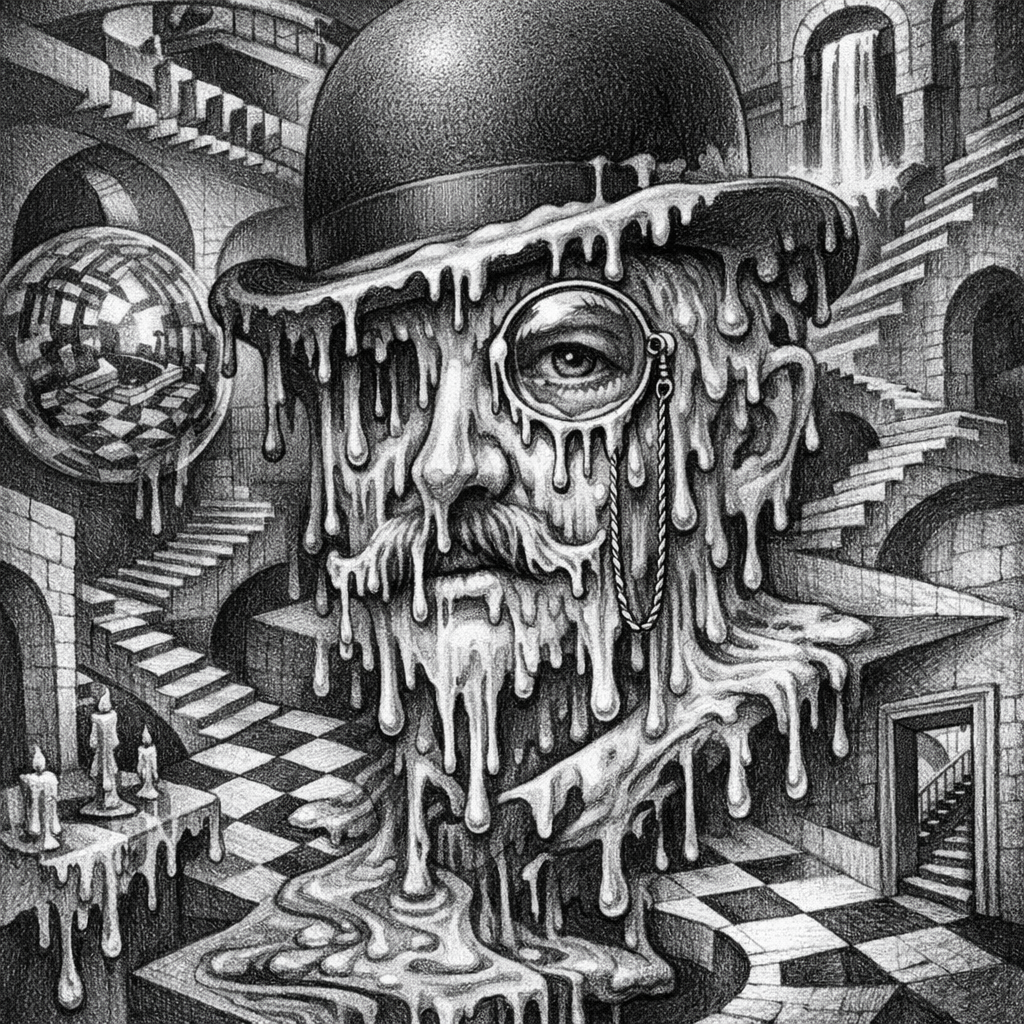
Enabling is Violence
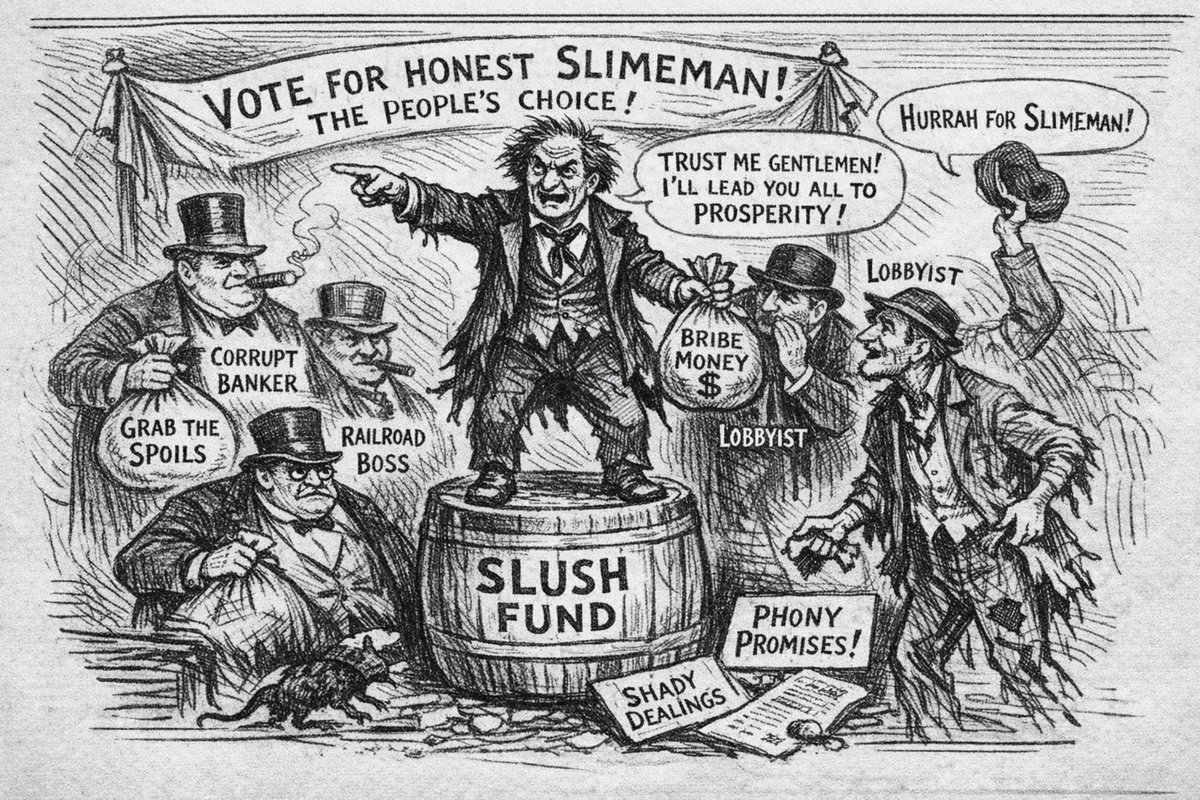
Why the DNC Should Delete My Number
"I saw the best minds of my generation destroyed by madness,
starving hysterical naked,
dragging themselves through the negro streets at dawn looking for an
angry fix…"— Allen Ginsberg, Howl
"I pray to God you actually pray when somebody dies
Thoughts and prayers, way better off timelines
False claimin' not cute, I'm mortified" — Kendrick Lamar, Rich Spirit
Alcoholism.
Once upon a time, in America, this specific word was a matter of life and death in ways that most people will never know.
As recently as 2004, the Rockefeller drug laws, in the state of New York, made it illegal for drug addicts to congregate. In practice, this enforcement may have been relaxed but structurally, by the letter of the law, it was not permissible for a human being who struggled with heroin or crack to organize in the same way all the data showed helped humans with alcoholism.
As recently as 2014, health insurance in America was allowed to discriminate between an alcoholic and an addict as a reason to deny care.
One check of a box by the intake coordinator meant the kid didn't die.
One blind eye to let a patient drink a shot in the parking lot to make the toxicology report read okay in a chart meant the kid didn't die.
In a claim, it compresses even more.
303.x is the ICD billing code for alcohol dependence. 304.x is opioid dependence. Those four digits determined which patients got approved for treatment and which got denied—because insurers were legally permitted to cover one and not the other.
Same disease. Same brain. Same desperation. Different code. Different outcome.
The devil in the detail.
Pause there.
Think about it.
A checkbox.
Life. Possible death.
Honesty, Truth, Fraud.
A few millimeters of ink.
No neutral decision.
Binary.
What would you do?
I know what I did and I don't feel the slightest way about it.
---
Enabled
The transtheoretical model (TTM) is the gold standard for how we understand behavioral change in the human organism.
It fundamentally paraphrases down to: "people don't change until they have a negative consequence sufficient to motivate them."
https://www.ncbi.nlm.nih.gov/books/NBK556005/
It's not my idea or opinion. It's almost literally the pinnacle of human thought with regards to how we create positive change in people. It's common sense. Not a hint of tinfoil anywhere.
Yet every mother looking at her strung-out son has to make a choice in the moment when the product of her body is snotty, shivering on the porch promising to go to rehab tomorrow if they can have $20 now.
Another real choice.
Your loved one, suffering. Brutally. A chemical disease ravaging their fucking body and you've watched them waste.
You really can't bear to look at it.
You have to act.
But they're crying and screaming and they won't stop and you can't think.
They're telling you to your face they hate you, you don't love them, it's your fault.
And you know it's venom but there's truth in there and it hurts.
You're activated.
Think think think.
If you let them in, it'll stop.
But last time, they robbed you. That won't work.
If you just gave them the $20, you could get some sleep and think about it in the morning.
It's not the 'right' thing to do, but it's just for tonight. Just for right now. Just so I can get some relief.
Just like the addict. The twenty spot disappears the problem.
Plus, it feels caring. It feels good to see the suffering stop.
But wait!!!!!
The rehab lady talked about this.
Boundaries.
Tough love.
But that feels so... WRONG.
Cold. Harsh. Mean.
Bad.
Fuck.
Now what?
My baby is hurting.
Fuck fuck fuck.
In 2007 my mother had that decision and I'm alive today because of her choice.
I've had to make that decision and people I love are alive today.
I've lost count of the friends I've put in the ground because someone enabled and called it love.
If you've been at the crisis point, you understand the crisis point. You understand why good people make that trade-off. You know the intention.
And you also know no matter how good the reasons are, they are wrong.
---
The Weave
This is a small window into my perspective on two specific words in the English language and their implications.
I've watched myself get promoted from a junkie to an addict to a person having "prior episodes of Opioid Dependence and Substance Use Disorder."
In my career, I've had to train on, understand, and absorb multiple editions of the Diagnostic and Statistical Manual as the words we use to describe who has what pathology—what constitutes good, bad, and sick in the human condition—have been continuously, fluidly redefined. I know my mood disorders from my personality disorders, how they present, how to do differential diagnosis on them, what they explain, and importantly, what they don't.
https://www.psychiatry.org/psychiatrists/practice/dsm/about-dsm/history-of-the-dsm
I've had to interface with clinicians and treatment teams across the majority of clinical modalities in the treatment space. I have been in rooms and worked with the people who understand Attachment Theory, Internal Family Systems, and all the top frameworks as they adapted them to real-life deployment with patients.
I've had to work with doctors and nurses to understand all the medical complications our patient populations face, how they're treated, why, and what resources we need.
I've had to work with psychiatrists to understand the neurological impacts of all drugs of abuse as well as all the commonly deployed treatment medications and their evolving formularies—their risk profiles and mechanisms of action, including buprenorphine and all major SSRIs.
I've worked with state and local governments in a dozen states. I understand how things get done in blue states and red states. I understand the difference in culture, thought, and how each influences the availability of service options and the real-world practical implications of those policies.
I've worked at a national level with CMS, Medicaid, Medicare, NIH, JCAHO, and CARF. I'm familiar with the rules of all those bodies.
On my watch, I've probably processed $3B in claims across every major commercial insurance carrier. I've watched claims processing times correlate with stock prices in real time.
I have worked at enterprise scale with Google, Microsoft, Amazon, Facebook, Salesforce, and more. I understand your algorithm intimately because there is no platform prior to TikTok that I haven't deployed massive amounts of capital on.
I have started, led, and sold multiple companies. I have consulted for private equity, hedge funds, and on an IPO. I've learned and understood every layer of legal, accounting, tax, and regulatory up and down the stack.
During a gap year between deals, I went into the music business. It took me two years to be involved in five major label deals and numerous platinum records. When I reverse-engineered YouTube and Spotify data and discovered how digital payola worked, it stopped being fun so I quit. This was a decade before the Drake-UMG suit. (Guess whose numbers I modeled?)
During all this, my ethical and professional track record is unimpeachable.
I did all this from a $500 loan and an idea.
As an addict.
As a trauma survivor who collected all the C's in CPTSD.
As a non-monogamous, definitionally queer man.
Who has a special needs child.
With an autism diagnosis and a bonafide disability.
I feel like my contributions to liberal discourse have value and might be a welcome addition.
Especially at a time when things are so bad and we're all collectively scrambling for hard answers to complex questions.
---
...And Yet
That is not my experience.
At all.
I want to be explicit about something before I name the pattern.
I want the same outcomes.
I care about harm reduction, dignity, safety, autonomy, and people not dying.
If I were arguing across the alphabet against conservatives, reactionaries, or people who deny systemic harm, I wholly understand this would be a very different conversation.
I'm not challenging the goals.
I'm challenging approaches that I've repeatedly seen fail the people they were meant to protect.
Here's the pattern I'm trying to name clearly:
In my lived experience, when I disagree with liberal-minded human beings on social issues—even when values are aligned—the interaction reliably shifts away from the actual argument and into tone, framing, or identity.
If I'm able to compose a thought in such a way that it's not technically invalid, this invites whataboutism consistently.
Then disagreement becomes "mansplaining," "rigidity," or "that's just your experience," rather than engagement with the argument itself. This happens regardless of how much background I disclose or how carefully I contextualize my intent.
What I experience in those moments is not dialogue, but normalization pressure: an expectation that I collapse my cognitive style, my autistic communication needs, and my lived experience into their emotional or narrative frame—or be treated as a threat.
Then I'm expected to patiently listen to under-formed ideas I already know are bad and know where they lead, or else I'm rude.
It becomes a constant performance where I'm asked to treat a Wikipedia-level understanding as equivalent to things I've read deeply, lived through, and proven by doing in the real world.
I've never completed a full semester of college. I have a learning disability.
I employ PhDs.
And I'm regularly lectured about not being an expert and not being sensitive to "other ways of knowing."
And in the end, we say "Both And" and go our separate ways.
But the checkbox didn't have a "Both And" option.
The mother on the porch doesn't get to "Both And."
You let them in or you don't. You hand over the twenty or you don't. You check the box that saves the kid or you check the one that doesn't.
Life keeps presenting binaries that discourse has trained us to reject. And when the moment comes, all that nuance becomes a luxury you can't afford.
It's exhausting.
As someone who can reliably perform motivational interviewing techniques in clinical settings and understands the exact syntax and reasons behind nonviolent communication, I can identify the denial, deflection, rationalization, and justification when I see them.
They're using language of openness, inclusivity, and love and light. Yet all I see is a closed mind, addicted to a way of thinking, not in the correct stage of change to be open to new ideas.
I'm autistic. I have a pattern-matching brain. That's not a metaphor. It's how I process the world. It's the same capacity that's allowed me to operate successfully in high-stakes systems and build real outcomes in real buildings helping real people.
And I see the pattern enough to take responsibility for myself.
---
What the Family Learns
Here's what they don't tell you about treatment until you're in it.
The family shows up expecting to learn how to fix the addict. What they actually learn is how to look at themselves.
Every mother who puts her kid in treatment eventually has to sit in a room and hear things that don't feel good to say out loud. Things that happened in her home. Patterns she was part of. Dynamics she didn't see or didn't name. The ways the system that produced the addiction included her—not as the cause, but as a participant in something that grew under her roof.
And she has to hold that. Eat it. Metabolize it.
After her life has been destroyed by someone else's choices. After she did everything she knew how to do. After none of this was the future she picked.
That's the deal. That's what recovery actually requires.
You don't get to be the pure victim of your loved one's disease. You don't get to point at the addict and say "that's the problem" while standing in the family system that shaped them. And nothing heals until you can hold both truths: yes, they did harm, and yes, I have to look at my own part. Not because what they did was okay. But because that's the only door to change.
---
The House We Built
So here's the part that's clinically true and politically unspeakable:
We raised them in our house.
The ugliness across the aisle didn't come from nowhere. The reactionary backlash, the resentment, the people we've written off—they grew up in the same country, shaped by the same systems, reacting to real conditions that we were part of creating or ignoring.
The progressive coalition has spent years pointing at the addict and calling it diagnosis. But that's not how family systems work. You don't get to be the righteous one and the healing one at the same time.
Whatever degree the other side looks ugly to us, we're never going to create the conditions for change until we look at ourselves and how things run. Not as self-flagellation. Not as "both sides" equivalence. But as the basic precondition for anything to get better.
The mother on the porch has to stop enabling. Yes.
But she also has to sit in the room and hear what she didn't want to know.
That's the work no one wants to do.
---
Done
I'm exhausted from over-credentialing myself, from endlessly proving legitimacy, and from having my perspective flattened into "mansplaining" even when I'm explicitly trying to be helpful and aligned.
I'm done pretending this dynamic is mutual, accidental, or benign.
I'm done pretending that I actually felt treated differently in the world as a "junkie" vs. "a person having substance use disorder."
Ginsberg saw the best minds of his generation destroyed by madness. I've watched mine enabled to death by comfort—by people who couldn't sit with the ugly truth long enough to let it work.
False claimin' not cute.
The thoughts and prayers version of progressivism—the kind that centers the feeling of helping over the outcome of help—is its own form of enabling. It's the $20 bill. It's the comfortable story that lets you sleep tonight while the person you claim to love stays sick.
I've been the snotty kid on the porch.
I've been the one who had to say no.
I know which one actually saved my life.
And I'm mortified by how many people I've watched choose the feeling over the function, then call it love.